Alejandro José Florido
Tomé
Bridging quantum gravity, numerical relativity and astrophysics through advanced computational methods. Data Engineer at ESA's PLATO mission. Science communicator.
Where equations meet the cosmos
Hi! I'm Alejandro. I put my curiosity for the cosmos and my craft as a software engineer into the same place: turning raw, messy signals into something a person can actually trust and understand.
As a PhD candidate in Physics & Mathematics at the University of Granada, I work as a Data Engineer & Researcher for ESA's PLATO mission — building the pipelines that turn raw stellar telemetry into asteroseismic oscillation frequencies, and using machine learning and Bayesian inference to connect those signals back to the physics inside a star. The rest of the time, I'm the engineer building the bridge: the software, interfaces and tools that make that research usable — and, through my science outreach platform El Prisico, understandable.
Advancing knowledge of stellar interiors using ML and Bayesian inference to relate physical and asteroseismological parameters across observations and models.
Professional Experience
PhD Researcher in Physics & Mathematics — Universidad de Granada
Advancing knowledge of stellar interiors using ML and Bayesian inference to relate physical and asteroseismological parameters, exploiting the large amounts of spatial and ground-based data available now and in the future.
Data Engineer & Researcher (PLATO Mission – ESA) — Universidad de Granada
Scientific pipeline engineering: transforming raw stellar telemetry into asteroseismic oscillation frequencies
- —Full-Stack & DevOps: Symfony backend, React frontend, Apache server optimization, MariaDB management
- —Cybersecurity hardening: iptables policies, Fail2Ban, SSH hardening, SSL certificate management
- —HPC computing: deployed interactive data visualization tools (R/Quarto); used HAYDN cluster for massive processing
Digital Content Creator — Nexus Cosmicus
Creating high-quality science popularization content combining physics, mathematics and technology
- —Writing articles and producing multimedia content for a broad audience
STEM Content Creator & Science Communicator — El Prisico
visit ↗Bringing physics, mathematics and technology to the general public in an attractive, rigorous and well-founded way
- —Python, Google Colab and 3 additional skills applied
AI Data Engineer (Astronomical Operations) — CEFCA — Centro de Estudios de Física del Cosmos de Aragón
Developed the OPTIMIA AI agent for the Javalambre Astrophysical Observatory (OAJ) — featured on TVE Aragón
- —Created REST APIs connecting SQL databases with LLM systems
- —Anomaly detection in time series for telescope operations
- —LLMOps, Flowise, and 3 additional skills
Geospatial Data Analyst — EGEMAP (Environmental Geography and Mapping)
Designed temporal database for geomatics projects (see egemap.eu/project/beca-leonardo/)
- —Developed analysis pipelines using Python/JavaScript
- —Database design, time-series analysis and 5 additional skills
Numerical Relativity Researcher — Universidad de Valencia
Investigated the Chern-Pontryagin scalar in binary black hole mergers using numerical relativity
- —Analyzed gravitational wave (l,m) modes as asymmetry indicators
- —Developed parameter correlation maps for spin, recoil velocity and luminosity
- —→ Led to PRD publication (2025)
Erasmus Researcher — Sapienza Università di Roma
Studied boson stars with a V∝|φ|⁶ potential under Dr. Massimo Vaglio and Prof. Paolo Pani
- —Implemented the dimensionless Einstein-Klein-Gordon formalism in Mathematica
- —Analysed stability criteria for higher-order self-interaction terms
Materials Science Researcher — Universidad de Granada
Performed X-ray diffraction analysis of MOF crystals
Theoretical Gravity Researcher — Universidad de Córdoba
Developed a weak-field approximation framework for gravitational wave generation
- —Implemented numerical solutions to the linearised Einstein equations
- —Carried out an independent study of differential geometry applications in GR
International Research Stays
Research Collaboration - ISIResearcher
Athena Research and Innovation Information Technologies · In person · 1 month — Participated in the collection, processing, and analysis of research data, as well as in the preparation and drafting of scientific publications arising from our joint research activities.
Erasmus InternshipResearcher
Sapienza Universita di Roma · In person · 2 months — Study of bosons stars using Wolfram Mathematica Notebooks to compare the solution for a potential proportional to |\phi|^6 between the strong limit and without approximation.
Research Output & Recognition
A catalogue of A-F variable stars within PLATO’s first field of view, LOPS2
→Camino Mesa, C. C., García Hernández, A., Suárez, J. C., Mirouh, G. M., Florido-Tomé, A., & Godoy-Rivera, D. (2026). A catalogue of A-F variable stars within PLATO’s first field of view, LOPS2. Astronomy & Astrophysics, 714, A318. https://doi.org/10.1051/0004-6361/202661071
Spatial Variability and Magnitude of Soil Erosion in Vineyards Across Spain: Insights from Standardized ISUM Measurements
→Rodrigo-Comino, J., Jódar-Abellán, A., Florido-Tomé, et al (2026). Spatial Variability and Magnitude of Soil Erosion in Vineyards Across Spain: Insights from Standardized ISUM Measurements. Hydrology, 13(9), 251. https://doi.org/10.3390/hydrology13090251
The potential of SPATO: Survey of PLATO A-Type stars Oscillation frequencies
→Camino Mesa, C. C., García Hernández, A., Suárez, J. C., Mirouh, G., Florido Tomé, A. J., & Godoy-Rivera, D. (2026, July 13). The potential of SPATO: Survey of PLATO A-Type stars Oscillation frequencies. Zenodo. 10th TESS/17th Kepler Asteroseismic Science Consortium Workshop (TASC10/KASC17), Aarhus, Denmark. https://doi.org/10.5281/zenodo.21334086
Gravitational-wave signatures of the mirror asymmetry in binary black hole mergers: Measurability and correlation to gravitational-wave recoil
→Leong, S. H. W., Tomé, A. F., Bustillo, J. C., del Río, A., & Sanchis-Gual, N. (2025). Gravitational-wave signatures of the mirror asymmetry in binary black hole mergers: Measurability and correlation to gravitational-wave recoil. Physical Review D, 112, 084078. https://doi.org/10.1103/1nnp-w5w4→ Investigated circular polarization imbalance (V_GW) in precessing binary black hole mergers→ Established a linear correlation between V_GW and final black hole helicity using SXS/RIT catalogues→ Demonstrated measurable V_GW effects with the NRSur7dq4 surrogate model (SNR ≤ 50)
Wheeler-DeWitt Equation & WKB in Quantum Cosmology
→Derived quantum FLRW cosmology from first principles. Resolved the initial singularity through WKB wave functions. Classified allowed and forbidden quantum states of the universe using the Wheeler-DeWitt equation within the mini-superspace approximation.
Dynamic Formation & Stability of Multi-State Boson Stars
→Numerically solved the Einstein-Klein-Gordon system to simulate the dynamic formation and stability of multi-state boson stars. Demonstrated stable multi-state configurations and fitted rotation curves to galactic observations, supporting boson stars as dark matter candidates.
Mirror Asymmetry in Binary Black Hole Mergers
→Investigated circular polarization imbalance (V_GW) in precessing binary black hole mergers using numerical relativity simulations (SXS/RIT catalogues). Established a linear correlation between V_GW and final black hole helicity, with measurable effects at SNR ≤ 50.
Boson Stars with Self-Interaction Potential V ∝ |φ|⁶
→Studied boson stars with a V ∝ |φ|⁶ self-interaction potential. Implemented a dimensionless formalism for the Einstein-Klein-Gordon system in Mathematica and analyzed stability criteria for higher-order self-interaction terms.
13th Iberian Meeting on AsteroseismologyInvited talkLocal Organising Committee (LOC)
→“Asteroseismic study of intermediate-mass stars using space data and machine-learning tools”
XVII Reunión Científica de la Sociedad Española de AstronomíaPosterVolunteer
→“What makes a HADS star? Data-driven study of the HADS phenomenon”Juan Carlos Suárez, Alejandro J. Florido, Sebastiano de Franciscis, Elham Ziaali
TASC10/KASC17Oral presentation
“The potential of SPATO: Survey of PLATO A-Type stars Oscillation frequencies”(Presentado por C. C. Camino Mesa). C. C. Camino Mesa, A. García Hernández, J. C. Suárez, G. M. Mirouh, A. Florido-Tomé.
TERRAenVISIONPoster
→“Cartografiado de la Erosión del Suelo en Viñedos para crear la primera base de datos nacional: El Enfoque ISUM Web-Based”A. Florido-Tomé, J. Rodrigo-Comino
NewFunFiCO MeetingOral presentation
→“Formación dinámica de estrellas de bosones multi-estado”A. Florido-Tomé, N. Sanchis-Gual
MSAP5 Validation Workshop
→LIRA-Paris Observatory
EDUCADO–MWGaiaDN Training School on Astro-AI and Machine Learning
→Universiteit Gent
12th Iberian Meeting on Asteroseismology
→Instituto de Astrofísica e Ciências do Espaço, U. Porto — Luso, Portugal
Gravitational Wave Open Data Workshop 2025
→GWOSC
FIRST EUCAPT SCHOOL: Cosmology
→Universidad de Valencia
TVE Aragón
TV interview about AI and astronomical data processing work at CEFCA and the Javalambre Astrophysical Observatory (OAJ). Featured for the development of the OPTIMIA AI agent.
Diario de Teruel
Front page appearance (Issue 27,222, August 19) for the development of the OPTIMIA AI agent for telescope operations at the Javalambre Astrophysical Observatory.
Full Scholarship — The Laplacian and Beyond: Celebrating Luis Caffarelli's Mathematics
Universidad Internacional Menéndez Pelayo, Santander
Partial Traveltalent Scholarship — Professional Development Programme
Edinburgh, UK
Bachelor's Thesis: Distinction (Matrícula de Honor)
Universidad de Córdoba
El Prisico
→Bringing rigorous, engaging science to the general public. Physics, mathematics and technology explained with passion and clarity.
Things I've Built
Websites, tools, apps and projects, each made for someone and for a reason.
 Tool
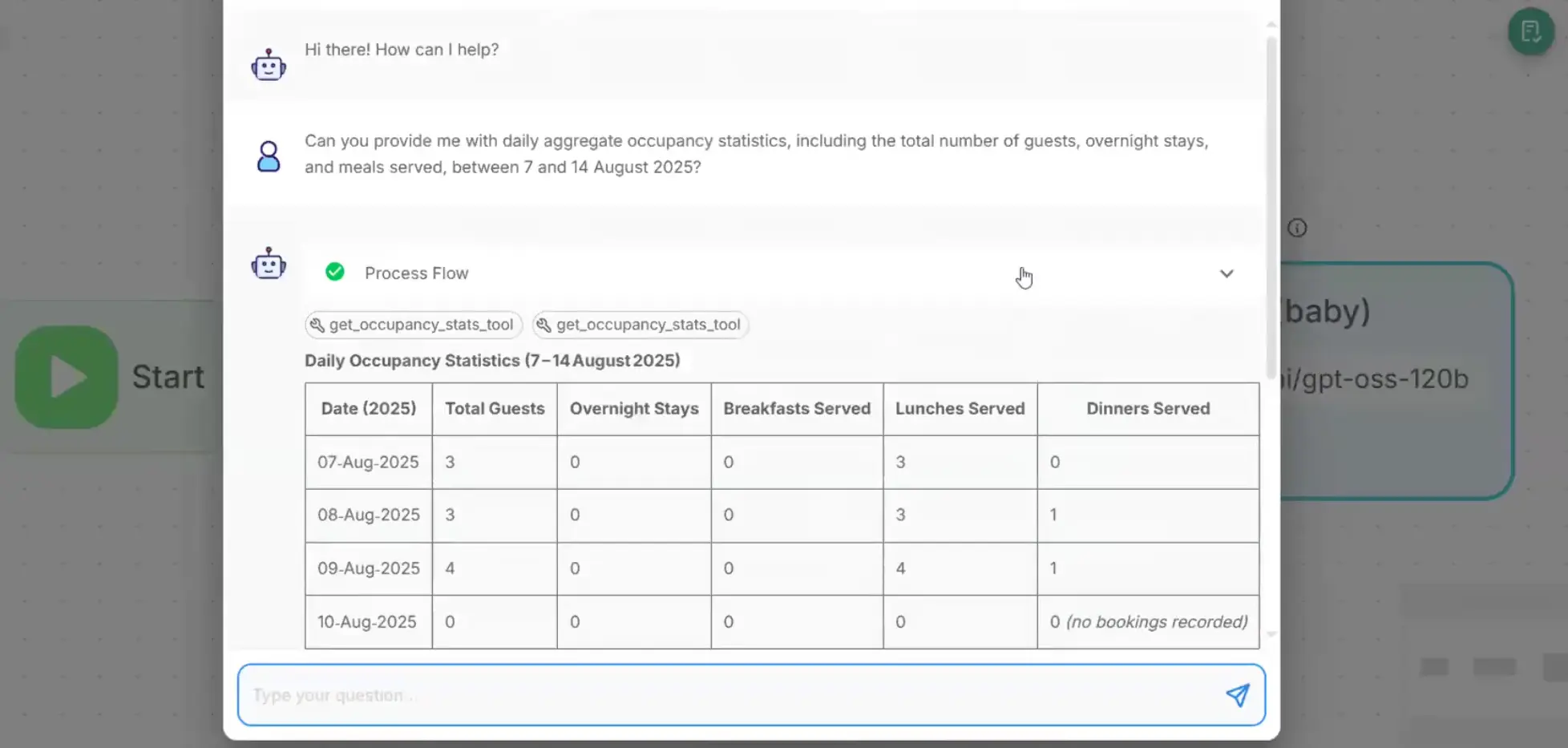
OPTIMIA AI Agent
Natural language to SQL AI assistant. Allows modifying observatory databases via chat using Flowise, with zero code involved. Deployed for astronomical operations.
- For
- CEFCA / Javalambre Observatory
- Why
- Let observatory staff update their databases just by chatting, without writing SQL.
 Website
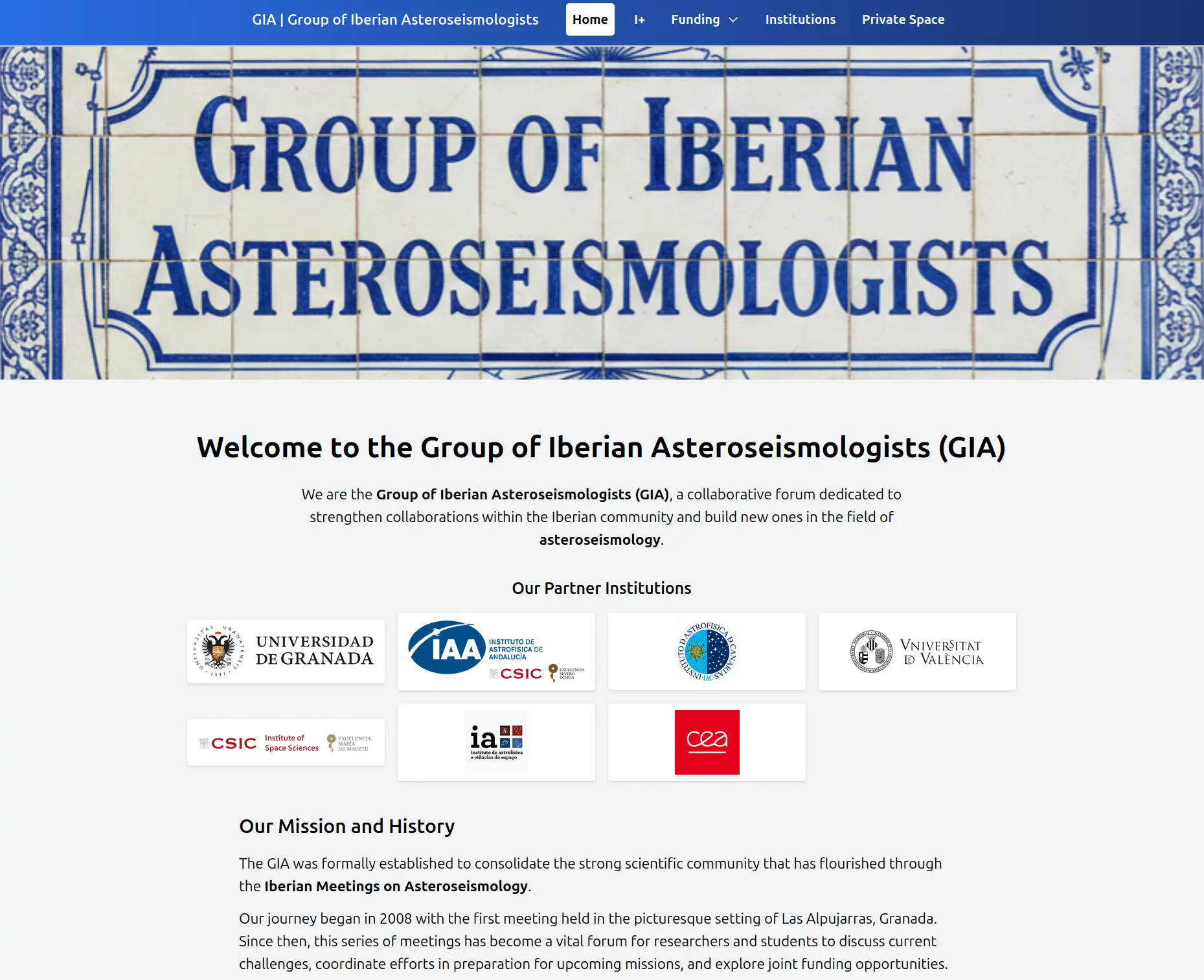
GIA Web Portal
Design and development of the formal platform for the Iberian asteroseismology community. A vital forum for researchers to coordinate missions and share funding opportunities.
- For
- Iberian Asteroseismology Group (GIA)
- Why
- Give the community one official place to coordinate missions and share funding opportunities.
- My part
- Development and maintenance
 Website
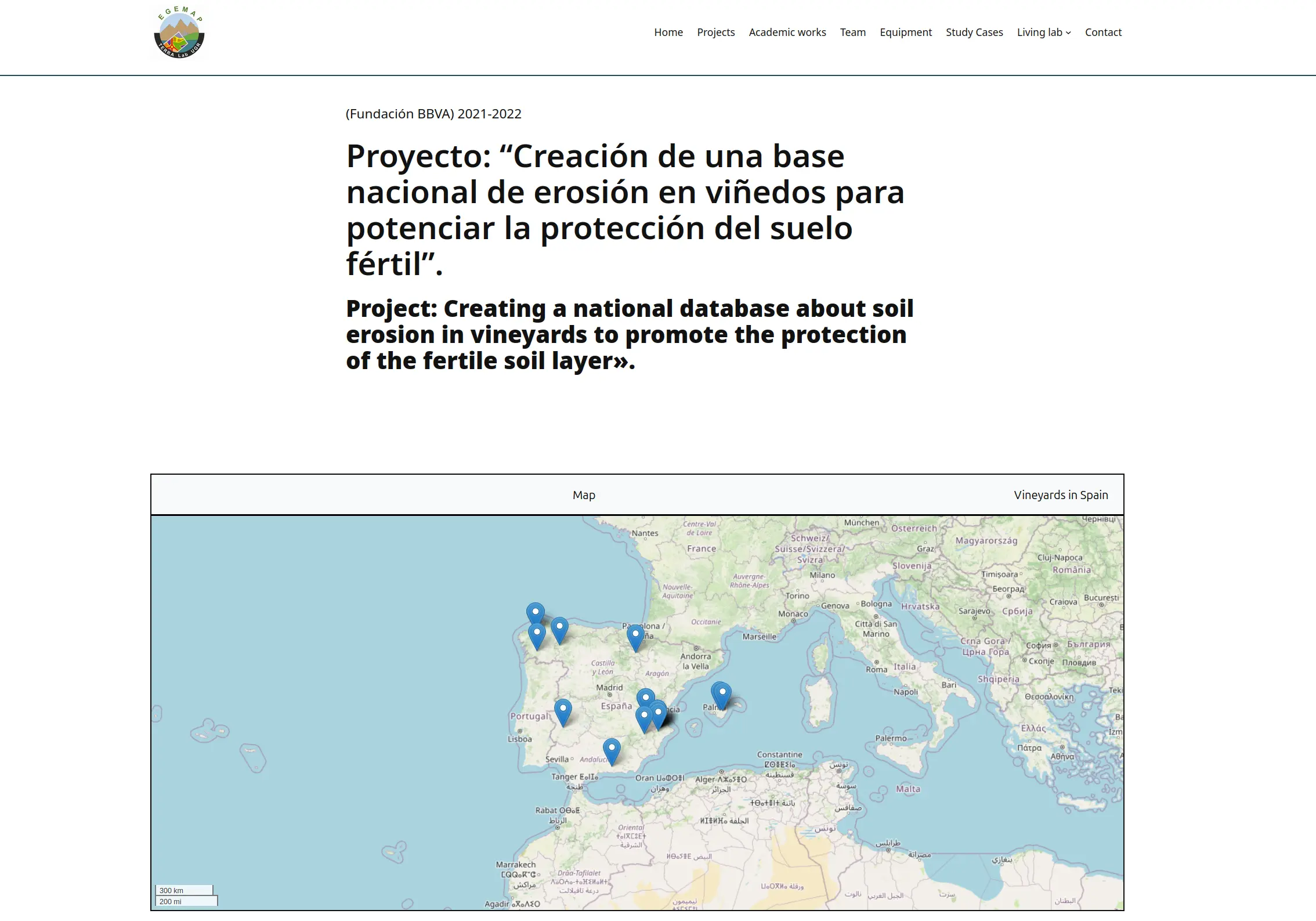
National Soil Erosion Map
Interactive Web GIS platform visualizing soil erosion across various vineyards in Spain. Highlights the severe deterioration of fertile land through interactive geospatial data.
- For
- Leonardo Grant / EGEMAP
- Why
- Make the deterioration of fertile land visible and explorable through geospatial data.
 Website
Cante de las Estrellas
Have you ever wondered what the Sun sounds like? Or different stars in the sky? On this website, we teach you in an educational, simple way, and what relationship it has with the interior of stars and the mysteries it holds...
- For
- University of Granada
- Why
- Understanding stellar physics in an attractive and original way
- My part
- Developer and maintenance
 Website
SPATO Database
Survey of PLATO A-Type stars Oscillation frequencies. Explore, filter, and cross-match data from TESS, Gaia DR3, and Open Clusters.
- For
- University of Granada
- My part
- Developer and maintenance
 Website
Star Evolution Group
From the pulsations of δ Scuti and γ Doradus stars to the structure of their interiors: we use asteroseismology, space photometry and stellar modelling to understand how stars live and evolve.
- For
- University of Granada
- My part
- Development and Maintenance
 Website
ASC 2027
Over the last two decades, asteroseismology has revolutionized our ability to describe stars, ushering in a revolution in stellar physics and beyond. Ahead lies a bright future, with the PLATO, Roman and Earth2.0 missions building upon the discoveries of MOST, CoRoT, Kepler and TESS. Equally, this first installment of the new Asteroseismic Science Consortium conference series will continue the efforts of the KASC/TASC series in building a community of observers, theoreticians, and everyone in between to tackle the ongoing challenges in stellar physics: angular momentum transport processes, magnetic fields and activity, binary interactions, and many more across the entire HR diagram.
- For
- University of Granada
- My part
- Developer and maintenance
Academic Journey
PhD in Physics & Mathematics
Universidad de Granada —
MSc Interuniversity MathematicsTFM: 9.8/10
Universidad de Granada — Thesis: Wheeler-DeWitt Equation & WKB Method in Quantum Cosmology. Courses: Riemannian Geometry, Lie Groups, PDE (Finite Elements), Mathematical Modelling.
MSc Advanced PhysicsTFM: 9.5/10
Universidad de Valencia — Thesis: Dynamic Formation and Stability of Multi-State Boson Stars. Specialization in QFT, Renormalization, Stellar Astrophysics, Observational Techniques.
SICUE Exchange
→Universidad de Granada — Key courses: General Relativity, Cosmology, Electrodynamics.
BSc PhysicsTFG: Matrícula de Honor
→Universidad de Córdoba — Thesis: Gravitational Waves: Theory & Simulations. Derived wave equations from weak-field approximation and calculated radiation powers for binary systems.
Teaching & Supervision
Fundamentos matemáticos de la Relatividad NuméricaInstructor
→udemy · Online · 1h — Comprender la importancia de las propiedades de Hausdorff y paracompacidad para garantizar la causalidad física. Identificar la diferencia geométrica fundamental entre vectores (flechas) y 1-formas (planos de contorno). Relacionar la estructura de los conos de luz Lorentzianos con la condición de estabilidad numérica CFL. Interpretar los diagramas de Penrose-Carter para entender la extracción de ondas gravitacionales en el infinito. Distinguir cuándo aplicar la derivada de Lie (sin conexión) frente a la derivada covariante. Explicar por qué los símbolos de Christoffel no son tensores y cómo esto refleja el Principio de Equivalencia. Analizar la gravedad de marea (curvatura) utilizando el tensor de Riemann y la desviación geodésica. Justificar la división del espaciotiempo en capas 3D (foliación) apoyándose en el Teorema de Geroch. Validar matemáticamente el problema de valores iniciales en simulaciones gracias al teorema de Choquet-Bruhat.
Introduction to Numerical RelativityInstructor
→Udemy · Online · 1h — Glimpse the future of gravitational-wave astronomy with next-generation detectors and machine learning. Understand the fundamental limits of analytical General Relativity and why supercomputers are essential to solve Einstein's Field Equations. Explore the conceptual framework of Numerical Relativity, including the 3+1 spacetime split and the anatomy of binary black hole mergers. Analyze historical gravitational wave detections (GW150914, GW170817) and how they sparked the era of multi-messenger astronomy.
Introducción a la Relatividad NuméricaInstructor
→Udemy · Online · 1h — Comprender los límites de la Relatividad General analítica y por qué las supercomputadoras son vitales para resolver las ecuaciones de Einstein. Explorar el marco conceptual de la Relatividad Numérica, incluyendo la separación 3+1 del espaciotiempo y las fases de las fusiones binarias. Analizar las detecciones históricas de ondas gravitacionales (GW150914, GW170817) y el nacimiento de la astronomía multi-mensajera. Vislumbrar el futuro de la astronomía de ondas gravitacionales con detectores de próxima generación y aprendizaje automático.
Desarrollo inicial de la web del grupo GARANATDirector
Atlántida CIPED · In person
Credentials & Achievements
Certificates, courses, and job and degree documents behind this portfolio. Private ones show the achievement, and the file asks for a password.
Technical Toolkit
Let's Connect
Whether you're interested in research collaboration, data engineering, science communication or just want to talk about the universe — I'd love to hear from you.
alejandrojoseflorido@gmail.com